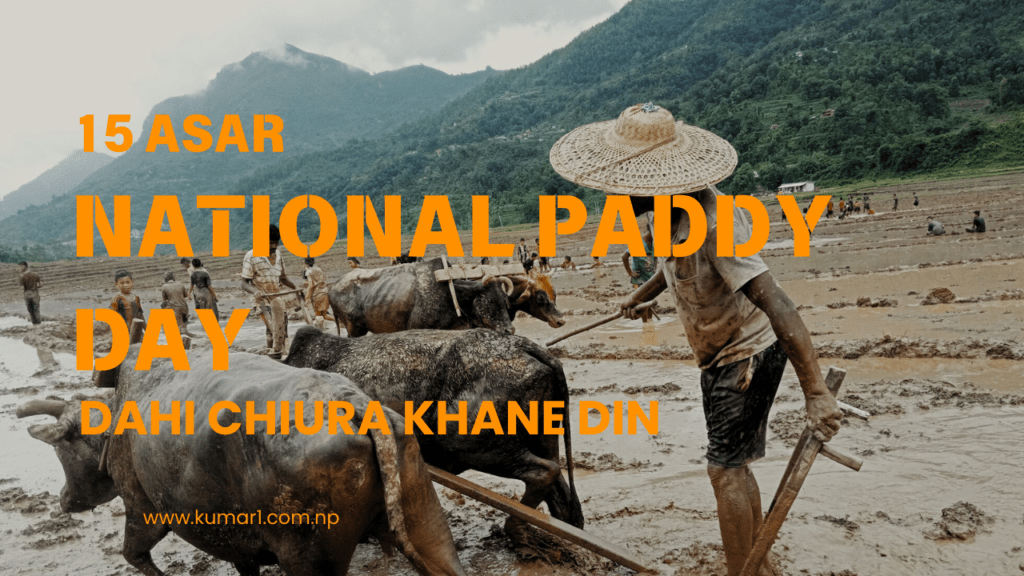
Asar 15 || Rastriya Dhan Diwas (National Paddy Day) || Dahi Chiura Khane Din
Agriculture is the lifeblood of Nepal, a country where the majority of the population relies on farming for their livelihood. Among the many agricultural celebrations, Rastriya Dhan Diwas, or National Paddy Day, which falls on Asar 15, stands out as a significant cultural and agricultural event. Asar 15 is a day filled with joy, tradition, and hard work, marking the beginning of the rice planting season. In this blog post, we will explore the importance of Asar 15, delve into its rich traditions, highlight the agricultural practices it promotes, and discuss its broader impact on Nepalese society.
The Importance of Asar 15
Asar 15, known locally as Rastriya Dhan Diwas, is a pivotal day in the Nepalese agricultural calendar. It marks the onset of the monsoon season, which is crucial for rice cultivation. Rice is the staple food for most Nepalese, and the timely arrival of the monsoon rains ensures a good harvest. Therefore, Asar 15 is not just a date; it is a day of hope and renewal for farmers across the country.
The significance of Asar 15 extends beyond agriculture. It is a day that symbolizes the connection between humans and nature, reminding us of the cycles of life that sustain us. This day is also a testament to the resilience and hard work of Nepalese farmers, who toil in the fields to provide food for the nation.
Cultural Traditions of 15 Asar
The celebration of 15 Asar is deeply rooted in Nepalese culture. On this day, communities come together in the fields to plant paddy seedlings, an activity known as “ropai.” This communal effort is often accompanied by traditional songs, dances, and feasting, transforming the labor-intensive task into a festive occasion.
One of the most cherished traditions of Dhan Diwas is the preparation and sharing of “dahi chiura,” a dish made of beaten rice and yogurt. This meal is considered auspicious and is believed to bring good luck and ensure a bountiful harvest. Families and friends gather in the fields to enjoy this dish, reinforcing the sense of community and shared purpose.
The “mud festival” is another joyful aspect of Asar 15. Participants playfully splash each other with mud, celebrating the fertile earth that will soon yield the rice crop. This tradition symbolizes unity and the joyful embrace of nature’s bounty, transforming the fields into a playground of laughter and camaraderie.
Advertisement helps us to grow
Agricultural Practices Promoted on Dahi Chiura Khane din (15 Asar)
Asar 15 is a day that not only celebrates the beginning of the rice planting season but also promotes sustainable agricultural practices. It emphasizes the importance of traditional farming techniques that have been honed over generations. These practices are adapted to the local environment and contribute to the sustainability and productivity of Nepalese agriculture.
One key practice highlighted on 15 Asar is the use of “bari” and “khet” fields. “Bari” refers to upland fields where crops like maize and millet are grown, while “khet” refers to lowland fields specifically used for paddy cultivation. Proper preparation and maintenance of these fields are crucial for a successful harvest, and 15 Asar serves as a reminder of these practices.
The day also underscores the importance of organic farming. Many Nepalese farmers rely on natural fertilizers such as cow dung and compost, which enhance soil fertility without the adverse effects of chemical fertilizers. 15 Asar encourages farmers to continue these environmentally friendly practices, ensuring the long-term health and productivity of the soil.
Another important practice associated with Asar 15 is the use of traditional irrigation methods. Nepal’s hilly terrain makes irrigation a challenge, but farmers have developed ingenious methods to ensure their fields receive adequate water. Asar 15 is a time to celebrate and reinforce these methods, which are vital for successful rice cultivation.
Advertisement helps us to grow
The Broader Impact of Asar 15 on Nepalese Society
The impact of Asar 15 extends beyond the agricultural sphere, touching various aspects of Nepalese society. Economically, a successful rice planting season sets the foundation for a good harvest, which is crucial for the nation’s food security and the livelihoods of millions of farmers. Asar 15 thus plays a key role in ensuring the stability and prosperity of rural communities.
Socially, Asar 15 fosters a sense of community and collective effort. The day brings together people from all walks of life, reinforcing social bonds and promoting a spirit of cooperation. The communal activities associated with Asar 15, such as “ropai,” traditional songs, dances, and the sharing of “dahi chiura,” strengthen social ties and cultural identity.
Culturally, Asar 15 is a celebration of Nepal’s rich agricultural heritage. The traditions and practices associated with this day are a testament to the deep connection between the Nepalese people and their land. Asar 15 serves as a reminder of the importance of preserving these traditions and passing them on to future generations.
Environmentally, Asar 15 promotes sustainable farming practices that are crucial for the health of the ecosystem. By emphasizing organic farming and traditional irrigation methods, Asar 15 encourages practices that protect the environment and ensure the long-term viability of agriculture in Nepal.
Challenges and Future Prospects
While Asar 15 is a day of celebration and hope, it also brings to light the challenges faced by Nepalese farmers. Climate change poses a significant threat to agriculture, with unpredictable weather patterns and extreme events such as floods and droughts becoming more common. These challenges make it difficult for farmers to plan and execute their planting schedules, affecting crop yields and livelihoods.
Moreover, the migration of young people from rural areas to urban centers and abroad in search of better opportunities has led to a labor shortage in the agricultural sector. This trend poses a threat to the sustainability of traditional farming practices and the continuation of cultural traditions associated with Asar 15.
To address these challenges, it is crucial to invest in agricultural research and development, provide support and training to farmers, and promote policies that encourage sustainable farming practices. Additionally, efforts should be made to engage the younger generation in agriculture, highlighting the importance and potential of this sector.
Advertisement helps us to grow
Conclusion
Asar 15, or Rastriya Dhan Diwas, is much more than just the start of the rice planting season in Nepal. It is a celebration of life, community, and the enduring spirit of Nepalese farmers. Asar 15 embodies the rich cultural heritage of Nepal and underscores the importance of sustainable agricultural practices.
This day serves as a reminder of the resilience and hard work of the Nepalese people, who come together to ensure a bountiful harvest despite the challenges they face. As we celebrate Asar 15, let us also recognize the need to support our farmers, preserve our traditions, and promote sustainable agriculture for future generations.
In conclusion, Asar 15 is a day that unites the nation in celebration and hard work, reminding us of the vital role agriculture plays in our lives. It is a day of joy, tradition, and hope, marking the beginning of a new cycle of growth and abundance. By honoring Asar 15, we honor the spirit of Nepal and the heart of its people.

Solution of Health, Physical and Creative Arts || Model Question – 1

Dashain Festival Nepal — Celebrating Victory, Family, and Tradition


Important Links

BLE MATHEMATICS SOLUTION
visit the web page to check out the solution of BLE Compilsory Mathematics